
We need to talk about streaming
There is power in divestment

“ICE recruitment ads on the platform.”
“Spotify’s co-founder Daniel Ek invests in million dollar AI military defence company Helsing.”
Cultural studies scholars would call this “cultural disaster capitalism”– the process in which governments and oligarchs reap the benefits of capital from genocide, extraction and human suffering. It’s the time of year again, where everyone posts free marketing to their social media platforms to talk about how many hours of music they’ve consumed.
For the past year people have been shouting for music listeners to end their Spotify subscriptions due to the lack of transparency surrounding where/how their personal data is being used, how the platform runs, and the abysmal payouts for the artists that make the content the service relies on. Ultimately, Spotify functions as a data farming and advertising agency that postures that it is “democratizing” music access by making it accessible to all. What we are left to reckon with is how a service has completely reshaped how we consume culture.
This year, I read Liz Pelly’s Mood Machine, an investigative look into the fraudulence of Spotify. I don’t plan for this to be a regurgitation of all the unsettling information I gleaned from the book, but rather a hypothesis of what we collectively can do with the information and what I feel the future music consumption holds. To start, here is a limited list of some of Pelly’s findings on Spotify streaming that feel important to note:
AI ruins the platform; this feels obvious at this point but it is troubling when you learn that the company has laid off 17% of its workforce (about 1,500 employees) since 20231
Spotify engages in modern day payola schemes – originally the illegal practice of record companies paying for radio play. Spotify promotes what they call “Discovery Mode” which allows artists and their teams to pay the service a commission for their submitted songs to be considered for Spotify “mixes” and editorial playlists… so payola
As of 2023, 150 editorial playlists were filled with mainly of PFC (Perfect Fit Content) content; background music created by session musicians that is then listed on the platform under fake artist profiles, as it is a cheaper and faster way to ensure people continue to stream their largest “chill” playlists such as Peaceful Piano, lo-fi beats, etc.2
Flattening of the history of music genres as they create nonsensical micro-genres (wtf is Crank Wave or Egg Punk); indie playlists used to be the home for musicians who were releasing music independently or signed to indie-labels but have been colonized by the likes of Gracie Abhrams, Taylor Swift, etc. because “indie” is now more broadly characterized through what the streaming service and TikTok users associating it with merely a slow-pop sound
Ek gleefully stated that Spotify’s biggest competitor is “silence”... this was was honestly the most shocking, as it implies that he sees the monetary need in ensuring that users are always hooked to the platform at every hour of the day or they lose out on making money3
This year saw Ek stepping down as Spotify CEO, as well as record-breaking lows in the company’s stock value. This was all due in part to news breaking about Daniel Ek’s investments in AI military, forcing several artists such as Xiu Xiu, King Gizzard, Deerhoof, Canadian acts such as Cindy Lee, Fiver, and Sunnsetter, to announce the removal of their catalogues from the platform in protest. I admire this and feel it is a move in the right direction that emphasizes the importance of artists having agency over their work. However, this is unfortunately not possible for everyone to do, especially smaller artists who rely on streaming as promotion for their music. The streaming model has reinforced a Stockholm Syndrome-esque environment that traps smaller artists into playing a game that prioritizes reliance on algorithmic data and streaming manipulation. The service preaches about how they’ve democratized access to music, but what do streaming numbers even account for? It’s troubling when there are artists whose songs go viral on the platform yet still have 20 people show up to their live shows. The reliance on data to determine whether an artist or band is valuable reinforces a system that upholds the need for gatekeepers. One could argue that label A&Rs used to be the human versions of this, but at least we knew we were being targeted then, when now we have AI personalizing our experiences so much that we believe we’re the ones in control.
I don’t think we should even have the ability to access almost all the music in the world within seconds and barely pay a dime for it. Streaming has allowed me to find artists I otherwise would not have been able to find, but the repercussions of my convenience are the livelihoods of the majority of independent artists. These artists make up a whopping 46.7%4 in share of recorded music internationally and yet only account for around 20% of sales throughout the music industry. Pelly interviews many different American based musicians who all state the same fact: ‘there is no room for me to simply make a living off my art, I have a day job that accounts for my survival.’ We know these things and yet we continue to prioritize our comforts. Profiteers like Ek peddle the notion of “democratizing” streaming when it reinforces that there is no longer room for oddball artists to thrive within their own niches, like say twenty years ago. You have legacy acts like Wilco and Pavement, to smaller-Canadian acts like Begonia, competing for streams with major label popstars like Beyonce and Chappell Roan. Is this really what democracy looks like? Who benefits from this other than the “Big Three” major labels–Universal Music Group, Sony Music Entertainment, and Warner Music Group? All three of these majors have begun buying shares, or outright purchasing, independent labels as subsidiaries. In the past they have acquired TDE (Top Dawg Entertainment); once home to artists such as Kendrick Lamar and SZA when they were independent, now a shell label that distributes under the “Big Three.” Similarly, Sony Music’s $430 million5 acquisition of once independent label, AWAL (Artists Without A Label), home to artists such as Rex Orange County, hemlocke springs, and The Beaches. Folks who would be considered independent on paper, but how does that hold up when these indies have the backing of the same corporate systems?
Most indie artists I know personally have stated that the only solution to this issue is simply switching platforms, particularly to the more ‘artist friendly’ Bandcamp, but I don’t know if I totally agree. I don’t believe there is one simple fix to such a pervasive issue that has shown up in how we buy clothes, watch movies and eat food. We love to parrot Marxist phrase, “there is no ethical consumption under capitalism”, as a joke but in some ways I believe it to be true. There is power in withholding our dollars, especially by following through on adhering to BDS efforts and intentionally boycotting companies that support genocide and mass extraction. My critique is that there is so much more that needs to be done than simply choosing the lesser of two evils. I think it has become second nature to want to find fast solutions to our problems, but there needs to be an ongoing conversation about how we navigate techno-authoritarianism ruining the little bit of Earth we have left. Most of these streaming services are not transparent about how their revenue is being spent, where they invest their money or have a real investment in ensuring the livelihoods of artists. Apple Music pays artists 1 cent per stream instead of Spotify’s $0.003 while CEO Tim Cook boasts about the “necessity” for Apple Inc.’s continued investments in AI technology.6 The argument that we should support artists through Bandcamp is a smart choice but the downside is that it still limits music discovery unless you absolutely already have an idea of who and what you’re looking for. My theory, not quite a solution but the steps I am personally taking are:
monetarily supporting 3-5 smaller artists/bands I love dearly by subscribing to newsletters or Substack’s to ensure minimal reliance on social media
going to local shows
buying merch (especially CDs and vinyl) directly from artists at shows or on their websites/Bandcamp
Purchasing digital downloads to have on my respective devices and hard drive
In essence, these feel like small acts that carry monumental amounts of weight. Many of us barely make enough to support ourselves, yet a lot of our final paycheques go towards enshittified subscription services. I understand that a major argument of this is that $12/month to Spotify is more economically possible for the average person than spending $25 every time they buy physical media. This makes sense, but we must ask ourselves: What are we willing to sacrifice to ensure that our attention, dollars, and time are not being manipulated by the billionaire-class? One of those things may be giving up convenience and recognizing that capitalism has stoked our entitlement by feeding us individuality, rather than the inherent community necessary for culture to authentically survive.
***
On the last night of my trip to Toronto in June, I saw one of my favourite Toronto-based artist Eliza Niemi, who played a mesmerizing set accompanied by equally talented local legends; Kenny Boothby [Little Kid], Alex Nunes [Spirit Josh] and Jo Hirabayashi [jo passed] at the EXPO vintage warehouse that doubles as a sweaty DIY music venue by-night. I was introduced to folk artists Lily Seabird from Vermont and Wishbone Zoë from western Massachusetts, who opened the show to a small crowd of locals. I got emotional thinking that there once used to be a thriving scene of DIY spaces in Toronto, but they shutter as time goes by due to unimaginable rental costs. I brought my partner who invited one of their old friends, someone significantly less invested in DIY, who griped about how “dingy” the space was and that the sound was so “terrible”. I remember being particularly annoyed that an outsider was encroaching on a space that historically has brought me closer to the notion of “home”. I wanted to argue with that these artists call spaces like EXPO (rip :|), Houndstooth, The Handsome Daughter, Cafeteria, etcetera home because the people that fill those rooms see their work as reflections of lived experience and not commodities reduced to trend data. Communities are built and maintained, threatened by city-by-law and NIMBYs who will never experience what it means to create something meaningful. And that is really the point of this essay, knowing that the art created by musicians should not be reduced to ones and zeros but shared community.
That show at EXPO was a reminder of the importance of creating the spaces that feel like they don’t exist. Specific to this show and many others held in the city, people like indie label/show promoter Cooked Raw or The Arcade DIY, who are still pushing through the hostility that comes with creating in a major city. These spaces envision community through music discovery as the future of sustainability in the music industry. I find myself pondering the age-old question of, “Why aren’t these artists bigger names?” and remember that the way we have been forced into consuming music through these services intentionally flattens music discovery to algorithms. Value is apparently created by Spotify itself who genuinely believes that any artist with under a thousand streams per song are “hobbyist” not to be taken seriously or have their work monetized on the platform. Audiences start to become unreliable arbiters of taste when algorithms shape our understanding of music, leaving less room for experimentation. In the wake of all of this, artists are essentially left behind or forced to reduce their life’s work to kitschy short videos that siphon the music of their original contexts and meaning. Show curators like Lewis Cole of Cooked Raw feel like the intentional protest against this, the difference is having someone in front of me telling me “I think this music is brilliant and I wanna share it with you!”, instead of a tech company willing to engage in payola schemes financed by the Big Three major labels. Intentionally pushing the works of artists whose labels have paid for their songs to show up at the top of editorial playlists and autoplay recommendations. I don’t know how many more times I can hear one of five “indie” musicians after every album I listen to... I’m looking at you MJ Lenderman, love you babygirl but I cannot hear the words, I’ve got a houseboat docked at the himbo dome one more time against my will. There is more music to explore even outside of the so-called indie bubble. I find many of us are consuming the same things, not making the effort to discover. I cannot blame us when there are very few hours in the day that are our own.
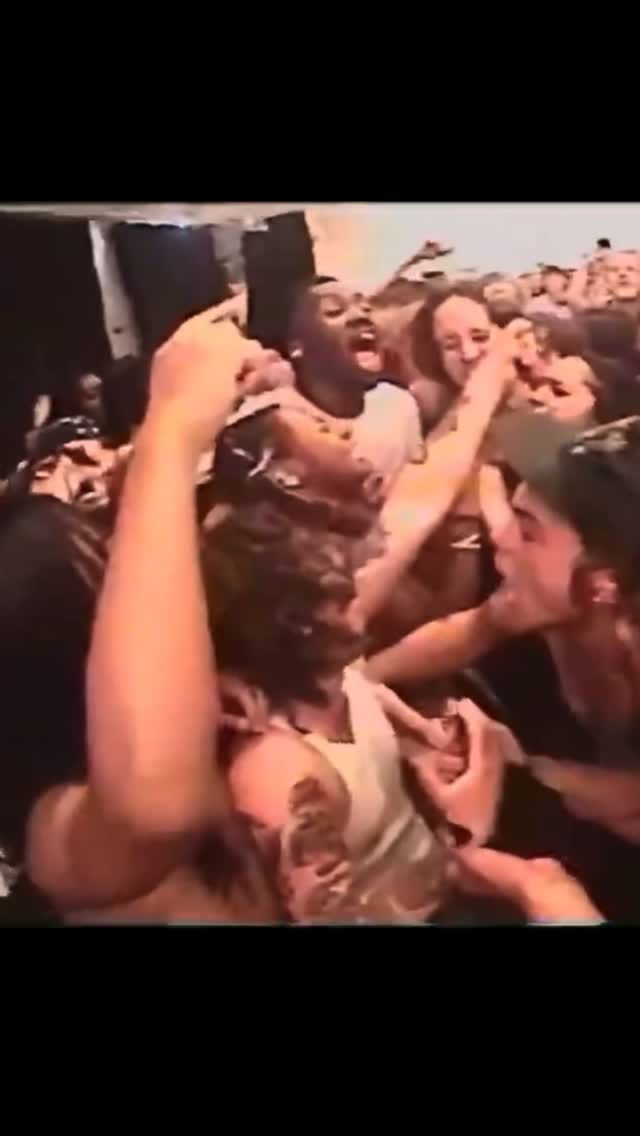
Occasionally I open social media to videos of younger hardcore fans raging to local bands from Toronto (more specifically, Brampton), from what I call the “Flower City Cinematic Universe”, like DoFlame, Mile End, and Clokwise. These communities are thriving in their authenticity and desire to create a space that feels emulative of the spirit of the 80s and 90s. It eerily feels like I’m watching a modern day replica of digitized VHS footage of Ian MacKaye and Guy Picciotto performing “Waiting Room” in 1988. None of us were even thoughts or multicellular organisms yet but it’s clear that this generation itches for third spaces and the organic-ness of DIY culture that was simply left to us from generations past, proxied as old zines and stories from oldheads. Every video radiates euphoria of the simple act of being in a dingy bar alongside other sweaty bodies screaming, “this is for flower city… FCHC”, because that is where I want to be. We are recreating what we know to have been a thriving ecosystem of musicians, artists, anarchists and punks.
Action items: Artists please stop giving free promotion to streaming services by falling prey to the spectacle that is Yonge-Dundas Square playlist ads with your face on them. You are instrumental in the propaganda machine that is buying into these services. Similarly, music enjoyers, stop posting your Wrapped at the end of the year. Spotify similarly relies on you to bolster their gimmicks to retain usership. In doing so, you reinforce a system that basically states you’re more than happy trading in personalized data and information to a company that will then sell it all to a data mining company. More importantly, if you’re seeking out music recommendations, Bandcamp, NTS, and buy a radio; community/college radio stations are a special place to find new music.
Here are some of my recommendations for music discovery that I’ve found reliable:
Mack Martens’ RACKET! on CKUW 95.9fm Fridays from 2-3pm CST
NO STATIC on CFRC 101.9fm Mondays from 6-8pm and cfrc.ca
send + receive festival; global experimental music and sound art festival every October (Winnipeg, MB)
window radio (Winnipeg, MB)
New Friends DIY / New Friends Fest (Toronto, ON)
The Music Gallery (Toronto, ON)
Agave: weekly concert series curated by Camille Léon at the Burdock (Toronto)
See you in the pit! Send letters like old times and divest from these predatory companies. There is so much power in a boycott!
Yes to all of this -- physical media is the way to go! Get outside! See a show! Be a human!